AI-Powered LinkedIn Post Automation
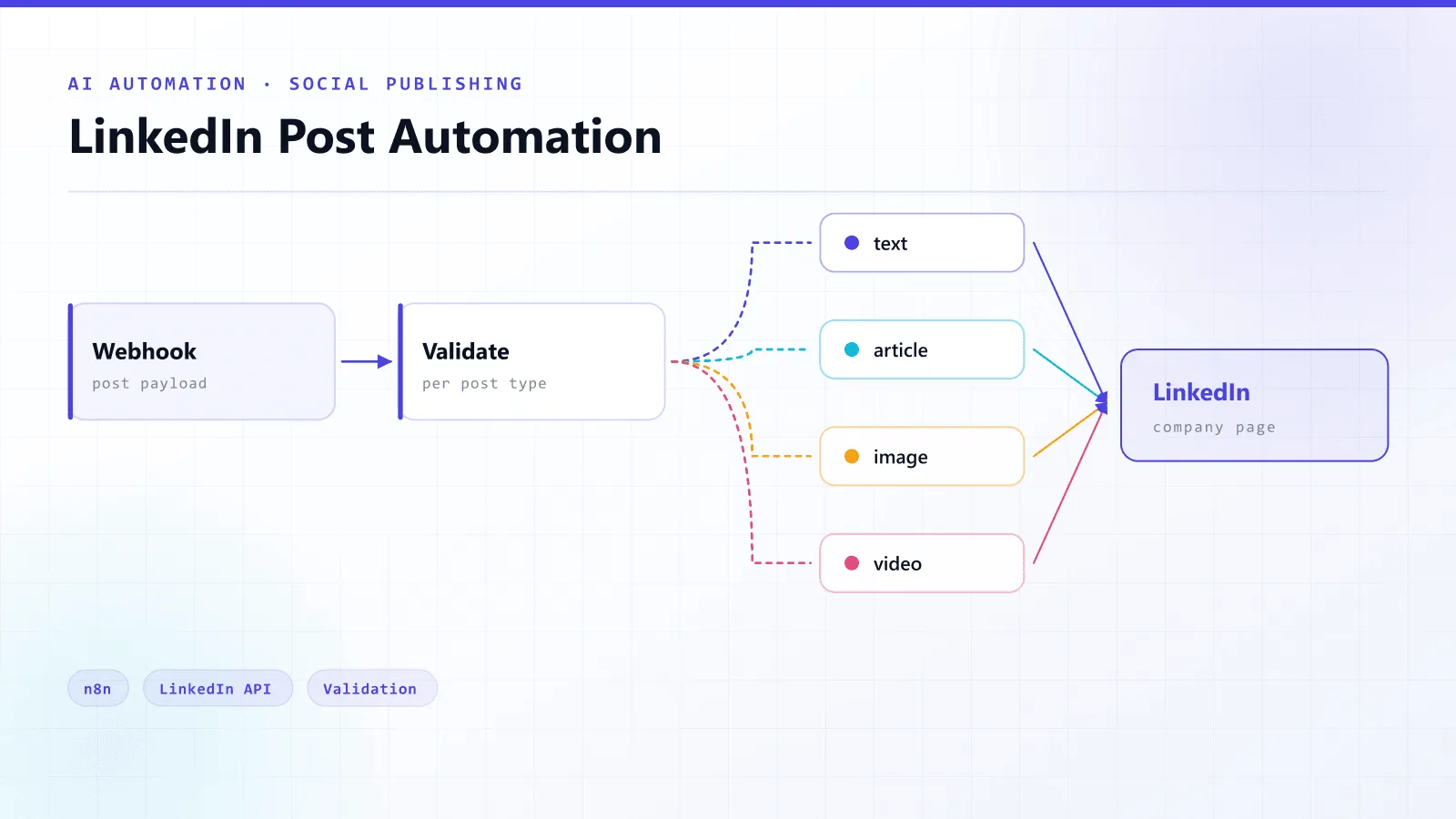
A workflow that automates publishing to a LinkedIn company page end to end. A webhook receives the post type — text, article, image or video — with the required content, and the flow handles everything from input validation through to final posting.
- Year
- 2025
- Engagement
- Workflow automation
- Focus
- Automation, Generative AI
- Status
- Open source
01 — The problem
Publishing to a company page by hand does not scale, and the LinkedIn API treats every post type differently. Text, article, image and video each need their own payload shape and upload sequence.
02 — Our solution
One webhook entry point that branches by post type. Each branch validates the fields that type actually requires, performs any upload the type needs, and then posts — so callers submit content without knowing LinkedIn's rules.
How it works
The pipeline, step by step — from the first input to the final output.
- 01
Webhook intake
A request arrives carrying the post type and its content.
- 02
Validation
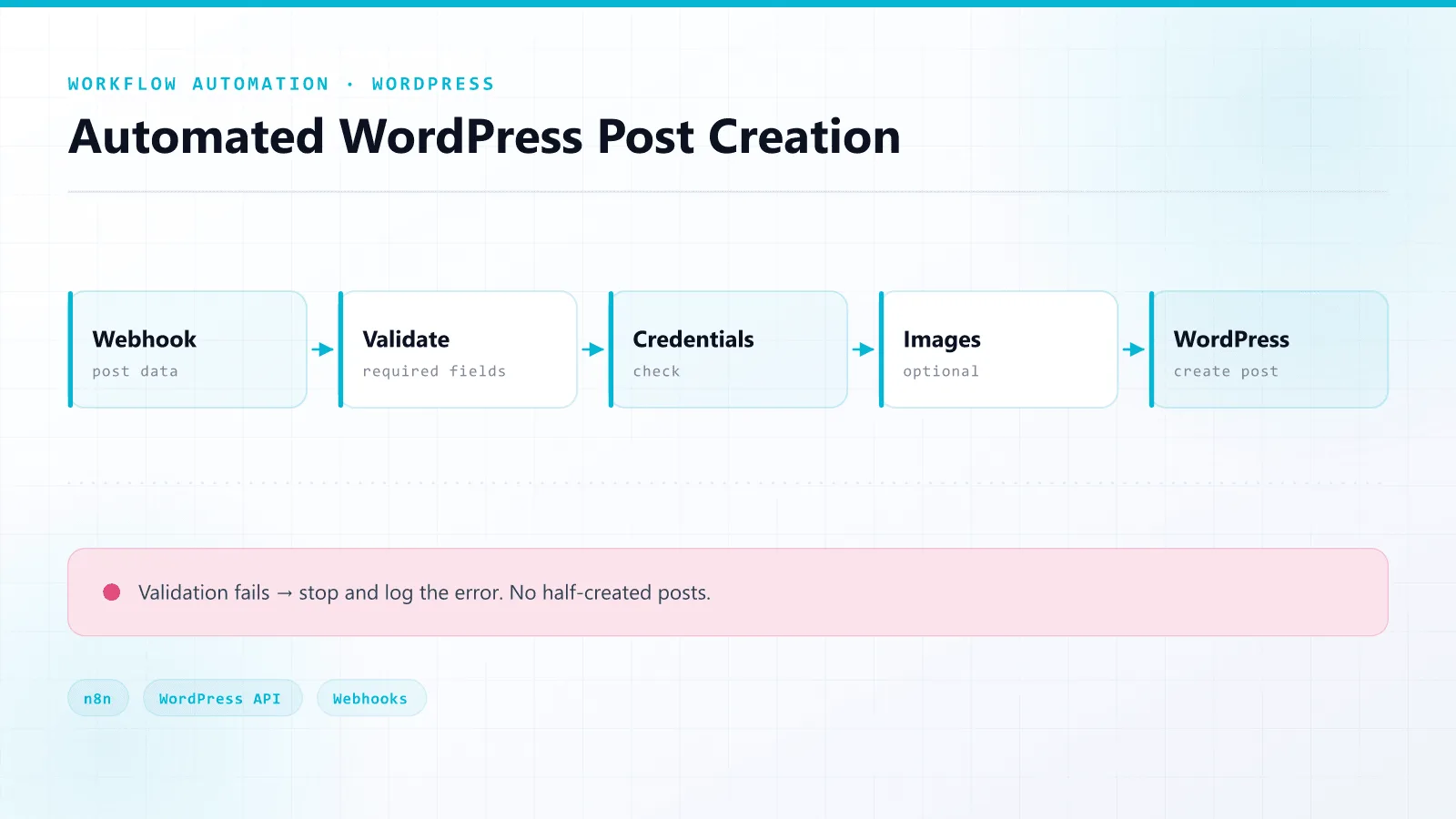
Required fields for that specific post type are checked before anything is sent.
- 03
Type routing
The flow branches to the text, article, image or video path.
- 04
Media handling
Image and video posts run the required upload and registration sequence.
- 05
Publish
The post is published to the company page and the result is returned.
What we built
The outcomes
01
Company page publishing reduced to a single API call
02
Invalid payloads rejected before they reach LinkedIn
03
All four post types supported through one interface
Challenges we solved
Four APIs wearing one name
Each post type has a different contract. The routing layer exists so that complexity does not leak to whoever is calling the webhook.
Failing early
Validating before upload avoids half-published state when a payload is incomplete.
Technology stack
Want results like these?
Book a free 30-minute discovery call. We'll map out your project, recommend the right stack and send a fixed quote within 48 hours.